9 hr
El Jem, Kairouan & Coastal City Private Day Tour
- Private experience
- Personal attention
- Premium amenities
- Free cancellation
Kairouan and El Jem Tour — Reserved Entry & Guided Day Trips
Roman stone holds the morning cool, minarets hold the afternoon light.
Compare fares, pick the fit — all bookings are mobile-voucher and eligible for free cancellation where shown.
9 hr
12 hr
8 hr
| Experience | Duration | Rating | Transfers | Pickup | Lunch | Free cancel. | Price | |
|---|---|---|---|---|---|---|---|---|
|
Luxury / Private
Most popular
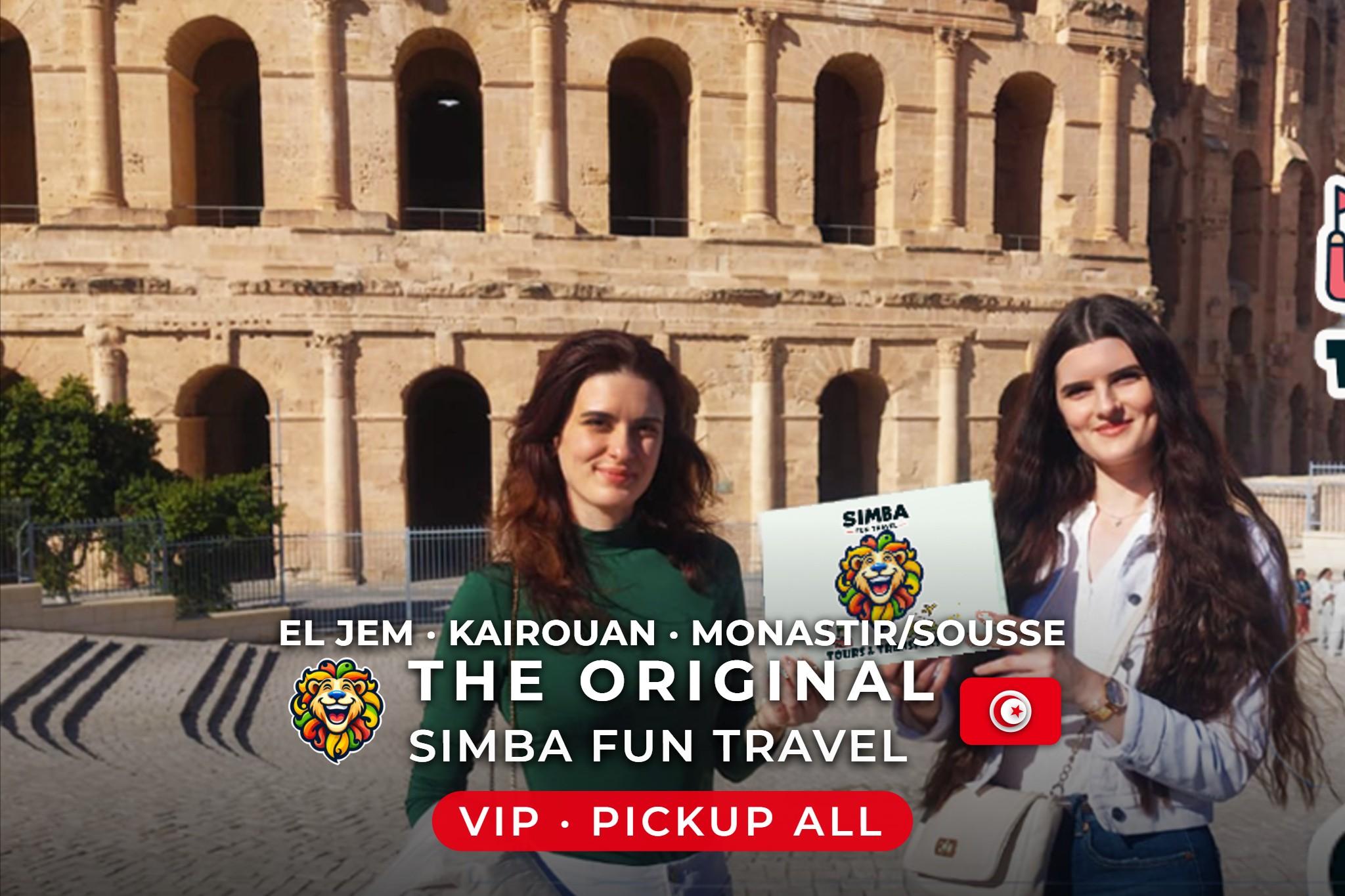
El Jem, Kairouan & Coastal City Private Day Tour
|
9 hr | ★ 4.7 | ✓ | ✓ | — | ✓ | €25 | Book → |
|
Guided Experience
Kairouan & El Jem Day Tour with Lunch
|
12 hr | ★ 4.6 | ✓ | ✓ | ✓ | ✓ | €14 | Book → |
|
Guided Experience
Kairouan Sacred City & El Jem Amphitheater Full-Day Tour
|
8 hr | ★ 4.4 | — | ✓ | ✓ | ✓ | €84 | Book → |
Worth it for history-minded travellers, not beach-day tourists
A kairouan and el jem tour asks for a long day on the road and 20 TND (Combined ticket for amphitheatre and museum, per person) at El Jem. For that money you walk into one of the best-preserved Roman amphitheatres anywhere — arena floor, subterranean corridors, upper tiers you can still climb — plus a mosaic museum most visitors skip. Kairouan adds what El Jem lacks: a living city, the Great Mosque courtyard, the Aghlabid basins, the Zaouia of Sidi Sahab, and medina workshops still weaving carpets. The combination pays off if you value UNESCO heritage sites and Roman engineering over pool time. It underdelivers for anyone who wants a quick photo stop, travels with restless children, or resents four-plus hours in a minibus. Arrive 08:00–10:00 to avoid mid-day heat and large tour groups arriving from major coastal cities, and the value math tilts firmly positive.
Bottom line: If Roman ruins and Islamic landmarks genuinely interest you, the El Jem and Kairouan day tour repays every dinar and every kilometre — if they don't, stay on the coast.
Hand-picked experiences loved by thousands of travelers
8 hours
Free Cancellation
Explore Roman ruins, Islamic heritage, and Mediterranean charm on a customizable private journey
8 hours
Free Cancellation
Journey through Tunisia's heritage: visit ancient mosques, Roman ruins, and medieval waterworks
9 hours
Free Cancellation
Explore Tunisia's sacred sites, Roman ruins, and coastal fortresses with private transport and surprises
9 hours
Free Cancellation
Journey through Tunisia's spiritual heart and Roman past on this immersive historical adventure
4-7 hours
Free Cancellation
Discover two ancient treasures of Tunisia with private transport and expert guidance through history
1 day
Free Cancellation
Ancient Roman arena, sacred mosque, and Mediterranean coast in one unforgettable day trip
4 hours
Free Cancellation
Journey to Tunisia's spiritual heart and discover ancient mosques, medieval waterworks, and carpet-making traditions
2 days
Free Cancellation
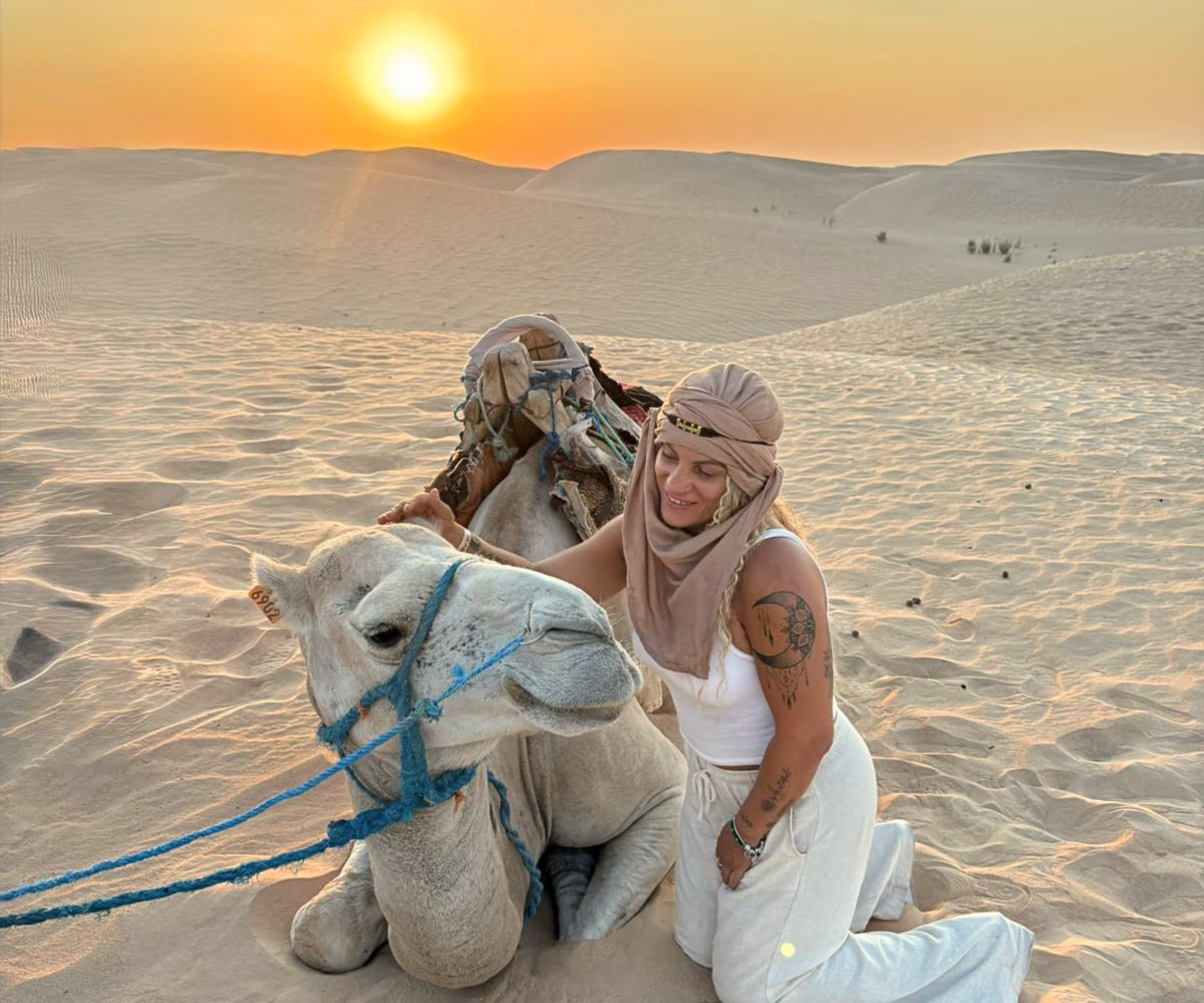
Journey through Roman ruins, Berber villages, and golden dunes with an overnight desert camp experience
Meet guide and purchase tickets
Tour the underground passages
View Roman mosaics
Travel toward next stop
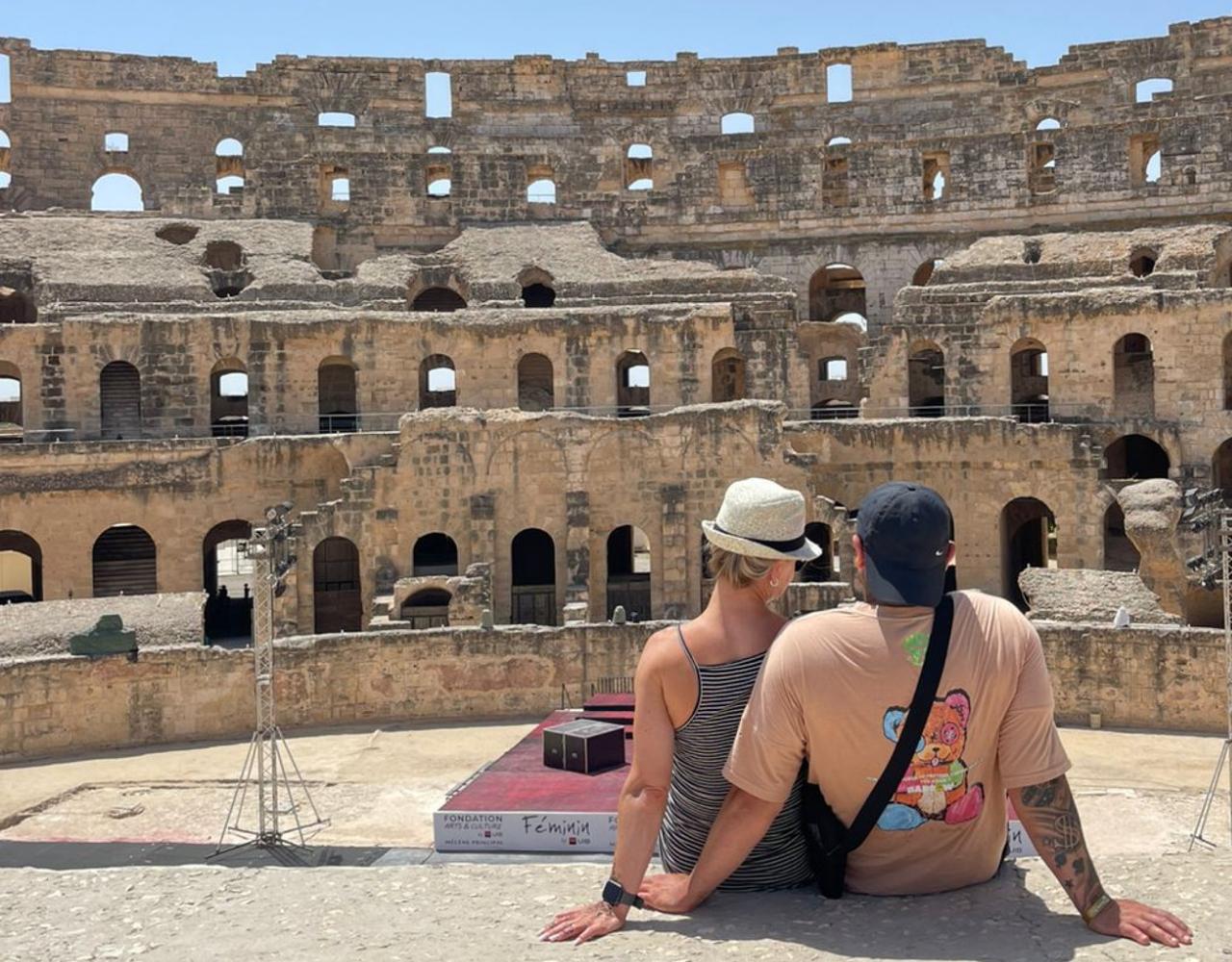
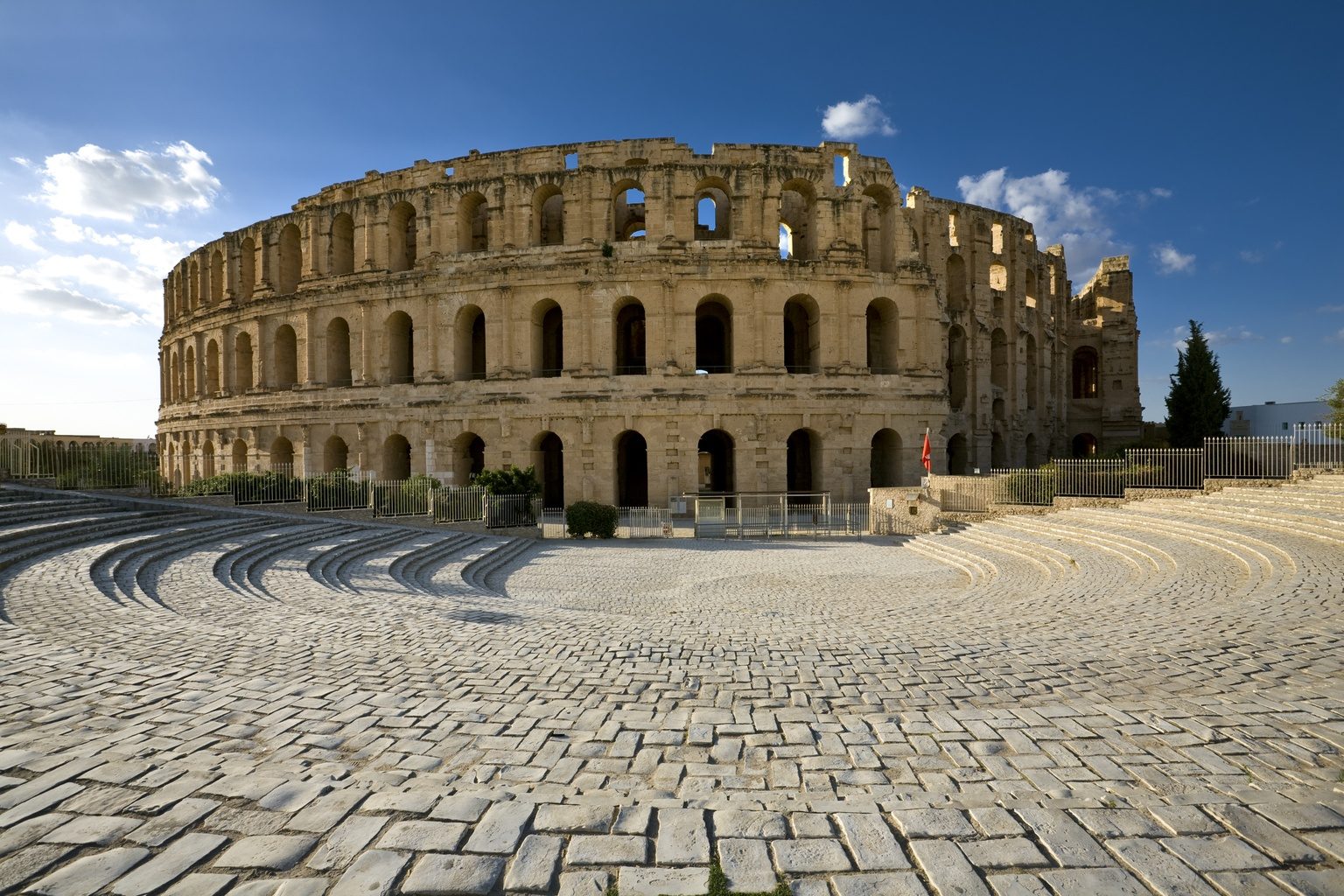
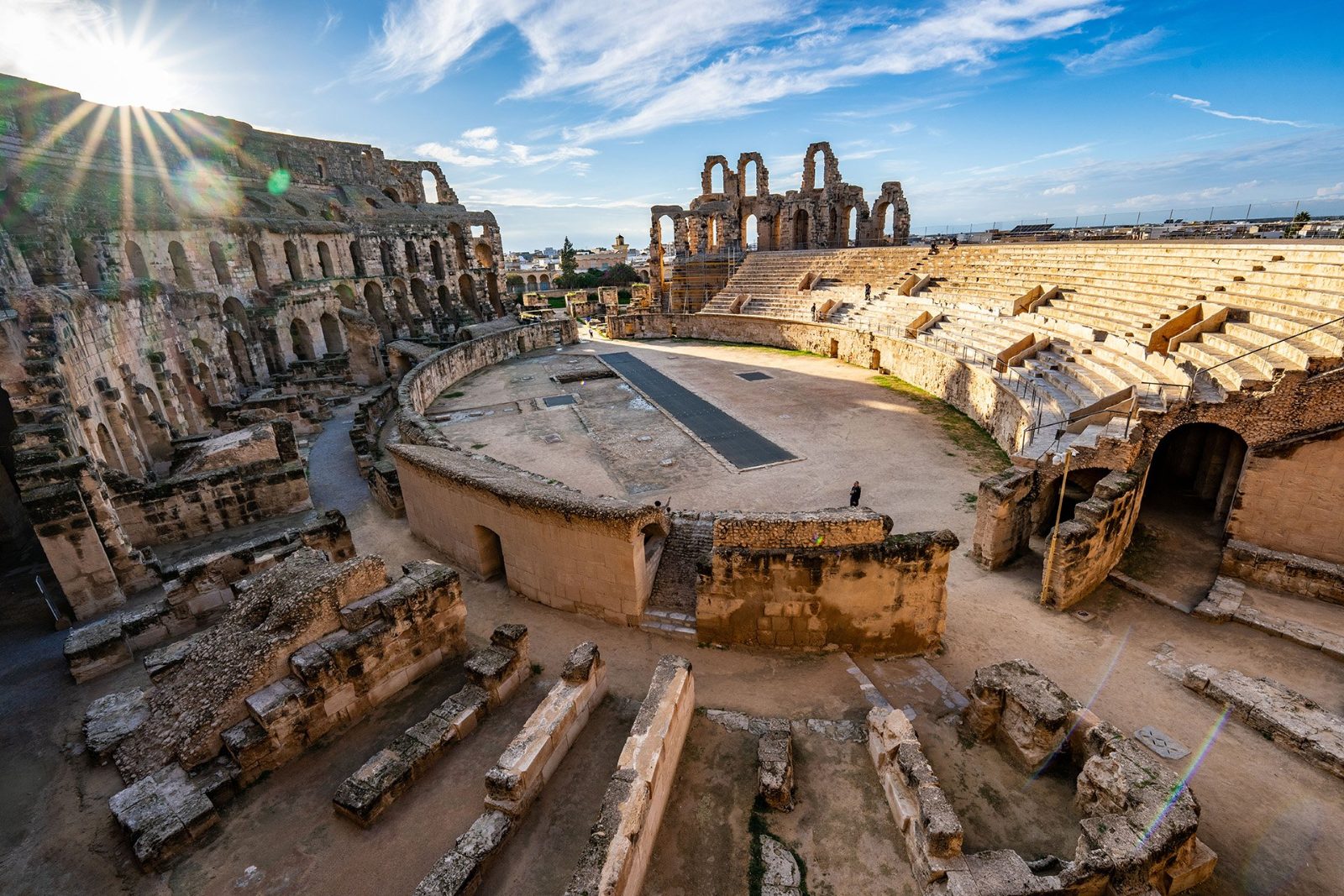
This massive structure is the third-largest in the Roman Empire, holding up to 35,000 spectators.
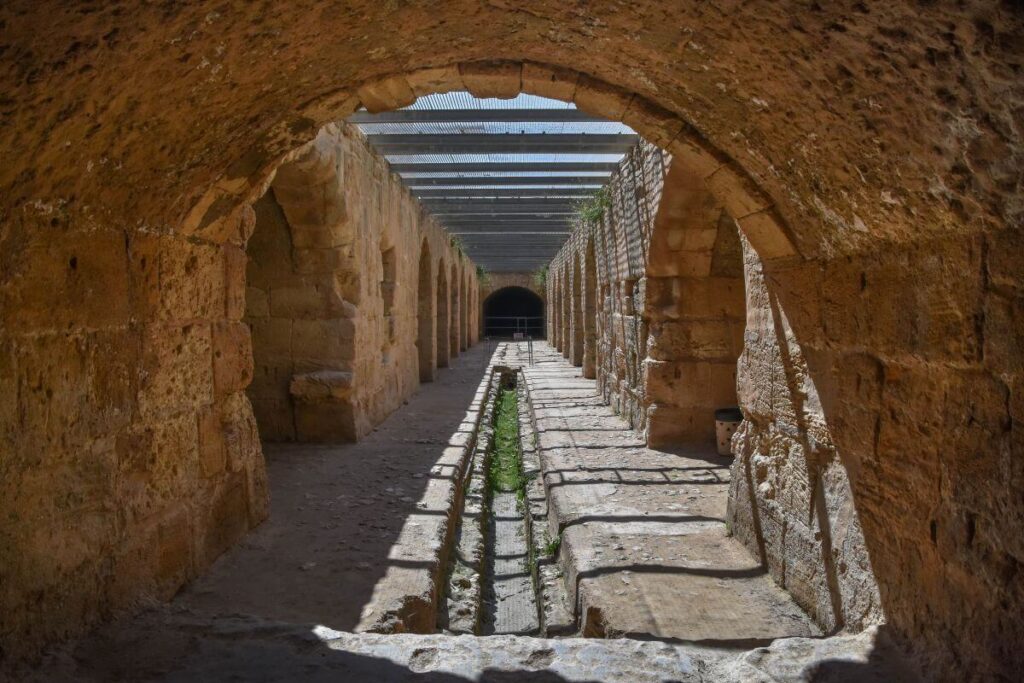
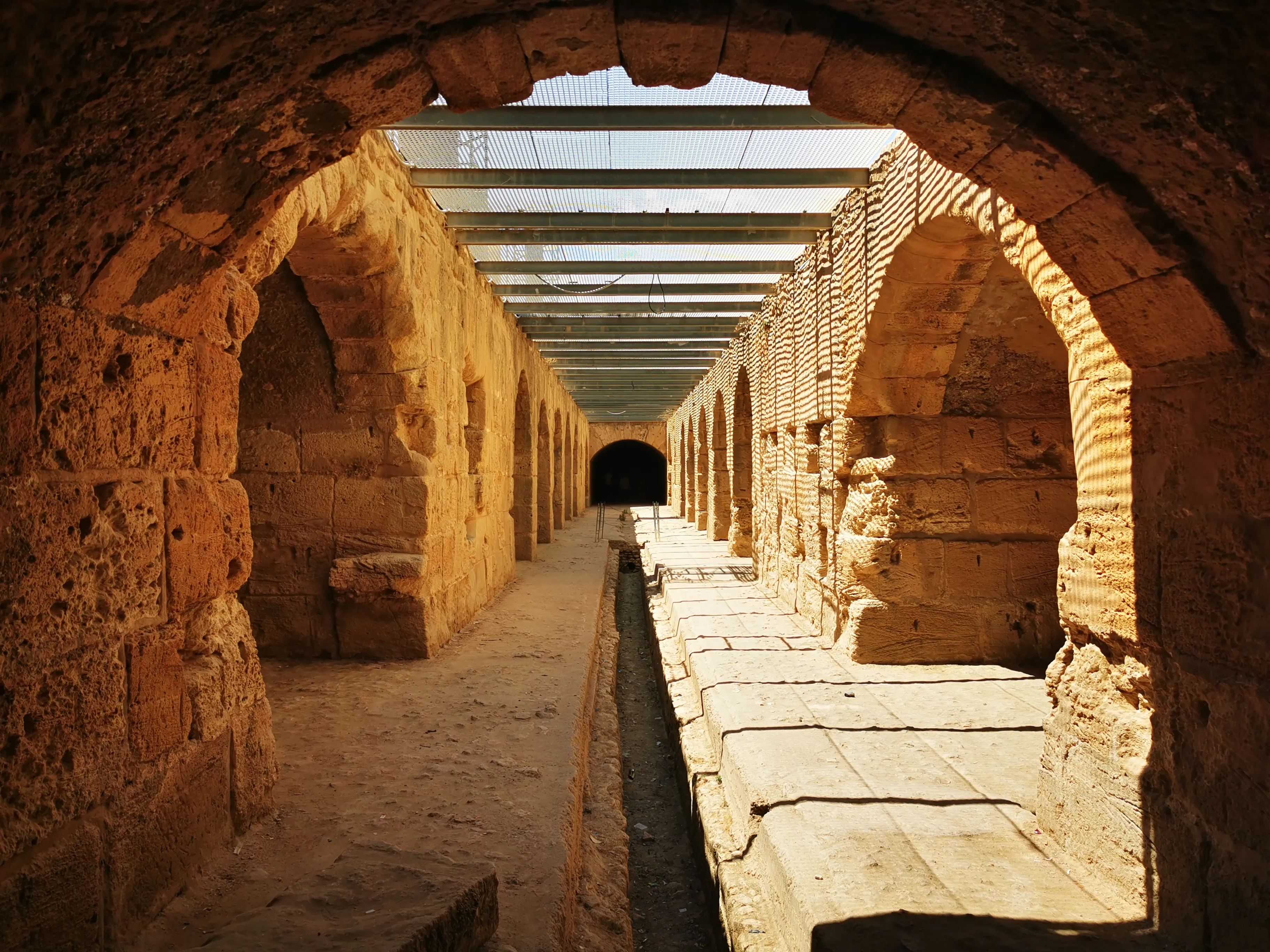
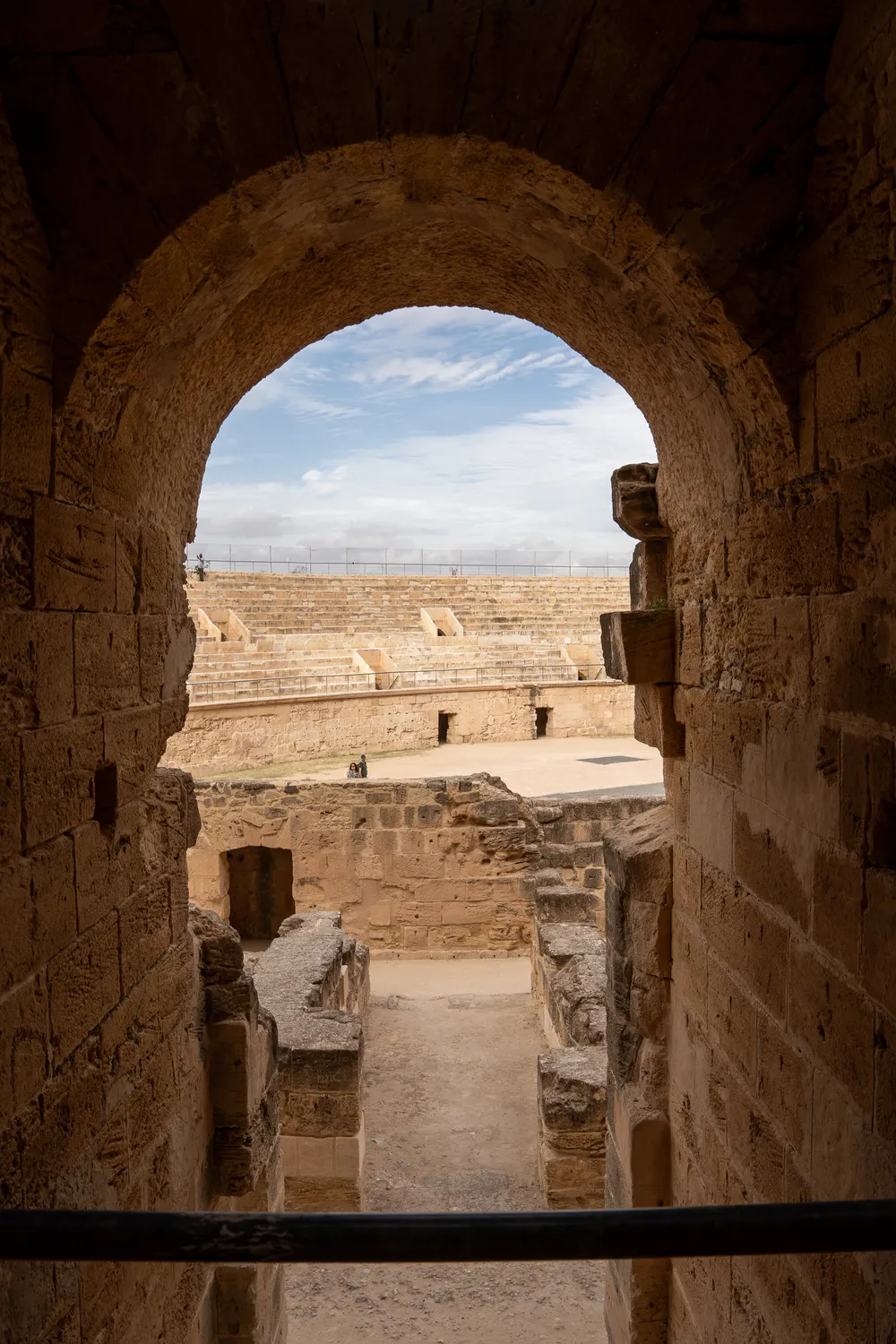
Explore the hypogeum where gladiators and wild animals were held before entering the arena.
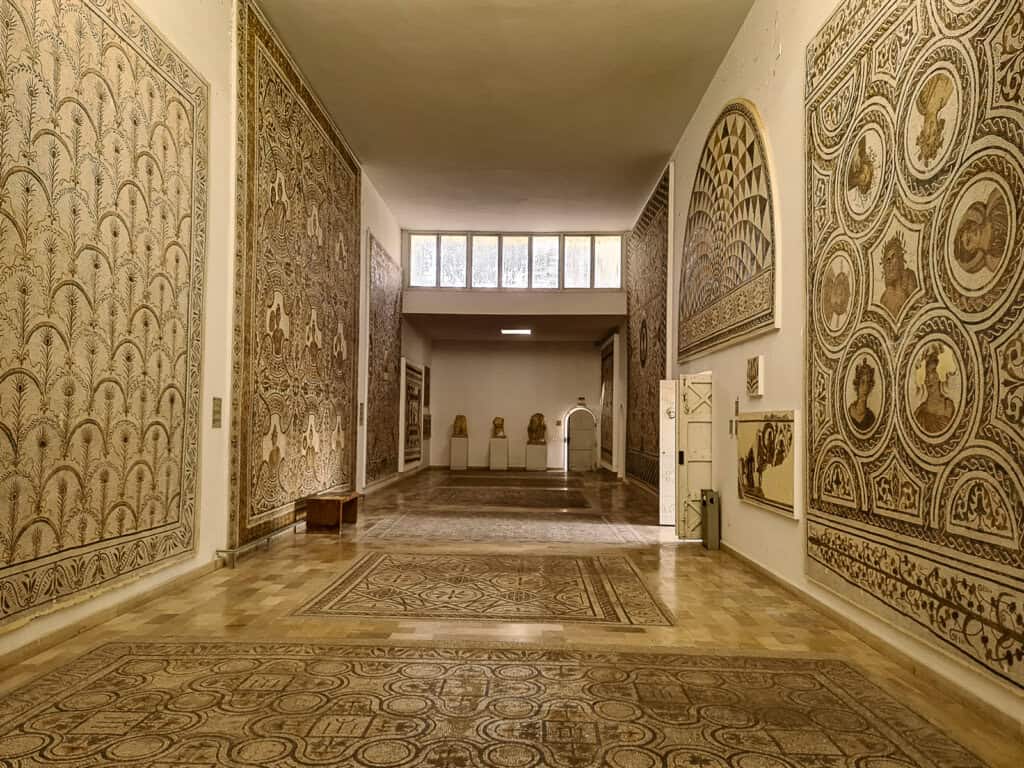
The museum houses intricate floor mosaics recovered from local villas.
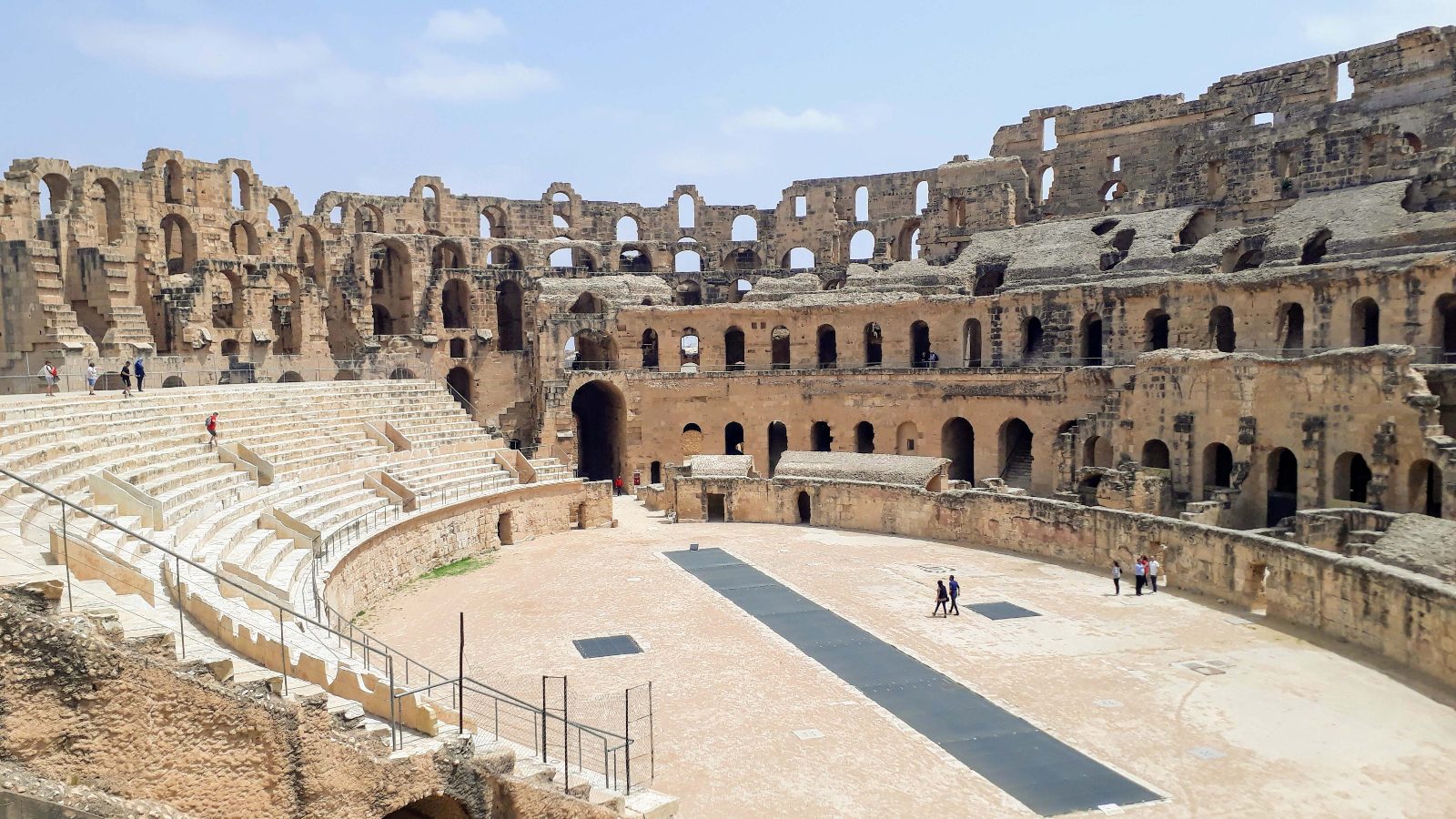
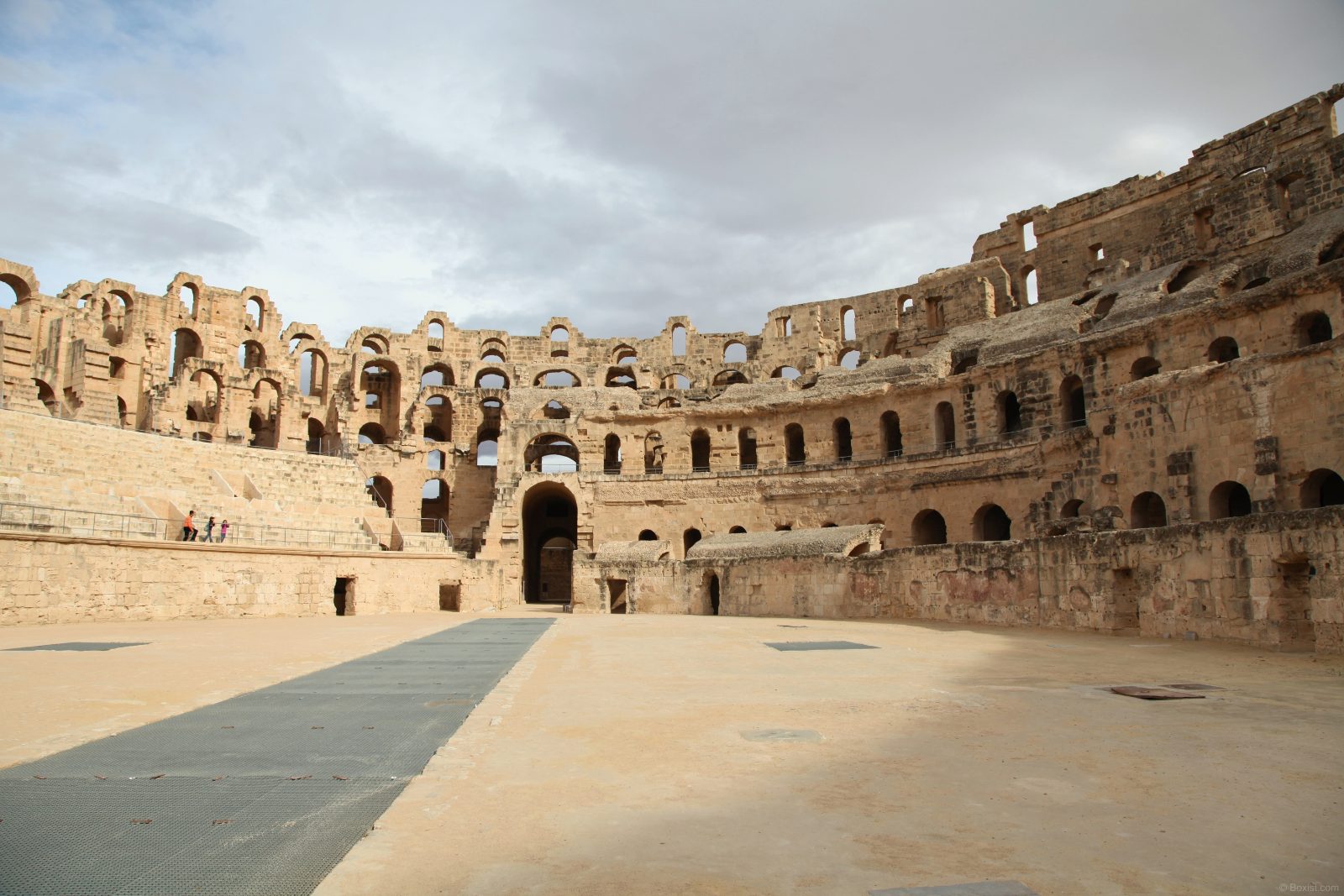
Stand in the center of the arena to visualize the scale of ancient events.
Climb to the higher levels for panoramic views of the Mahdia Governorate.
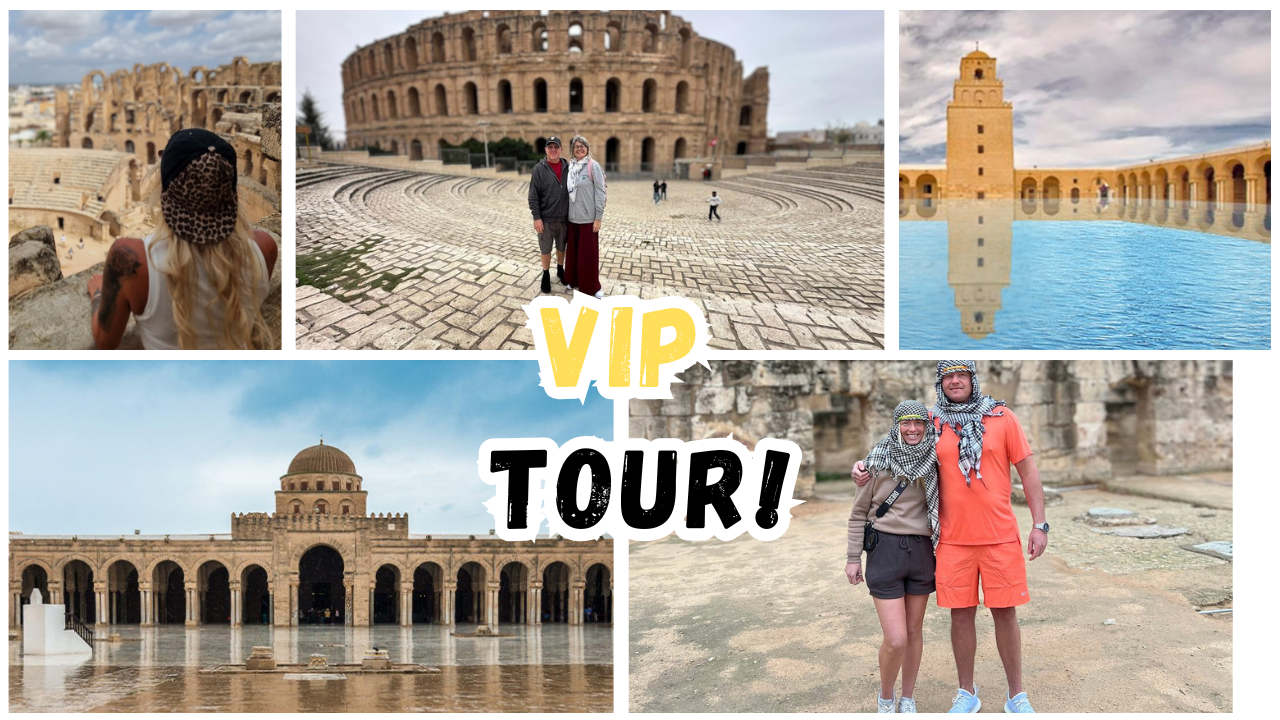
You arrive at El Jem before 10:00, when the ochre stone still holds the cool of the night and the ticket window has no queue. The 20 TND combined ticket goes into your pocket. You pass under an arcade pier and the arena opens out — sixty-five metres of pale floor, three tiers climbing above your head.
You take the stairs to the upper gallery. From there the town's minarets and satellite dishes sit level with your eyeline, and the oval reads as one unbroken ellipse.
Then you descend into the hypogeum. Two vaulted corridors run beneath the arena floor, cool and echoing, narrow enough to touch both walls at once. You stand where the lift shaft opened and look straight up at a rectangle of white sky.
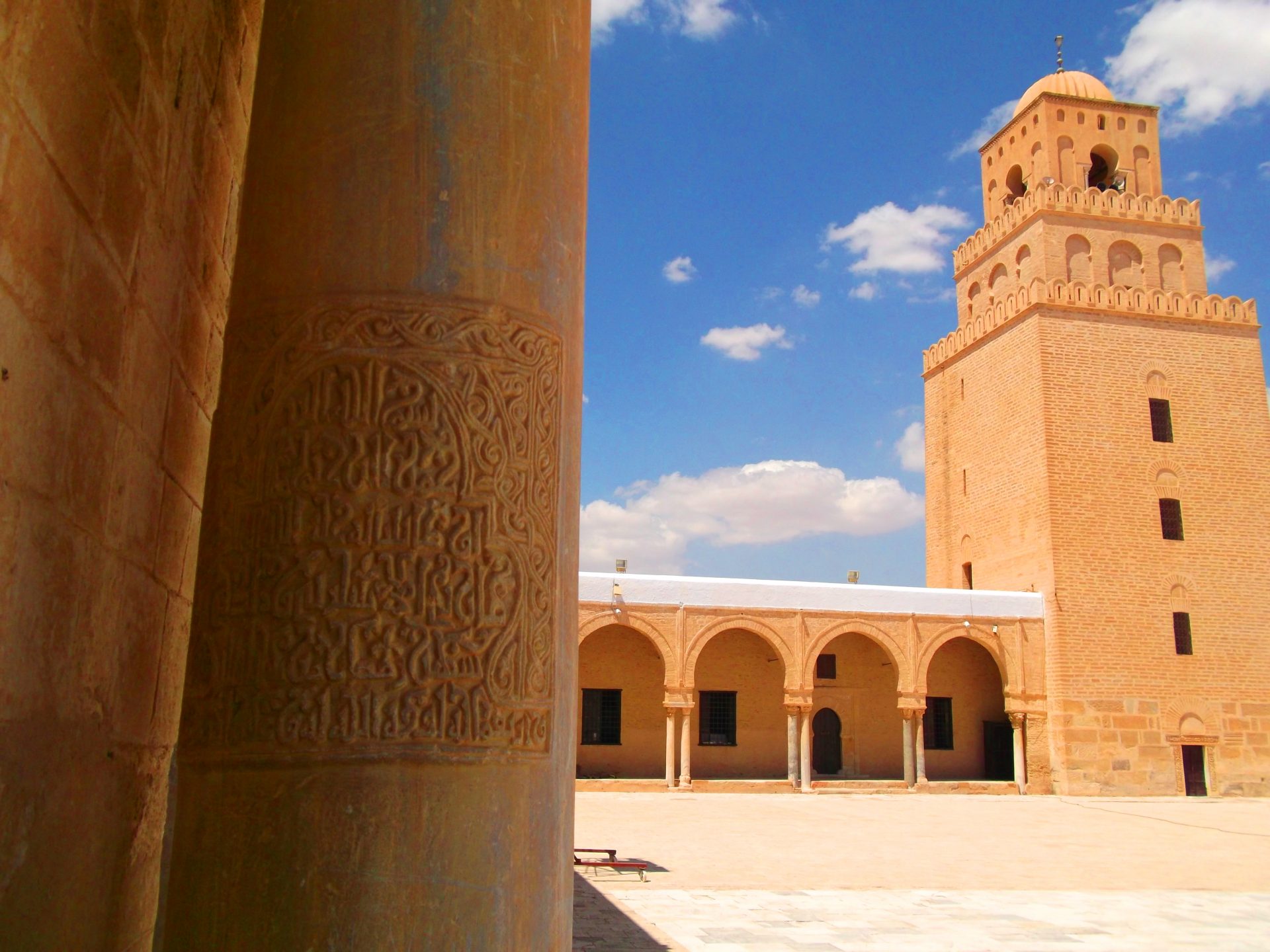
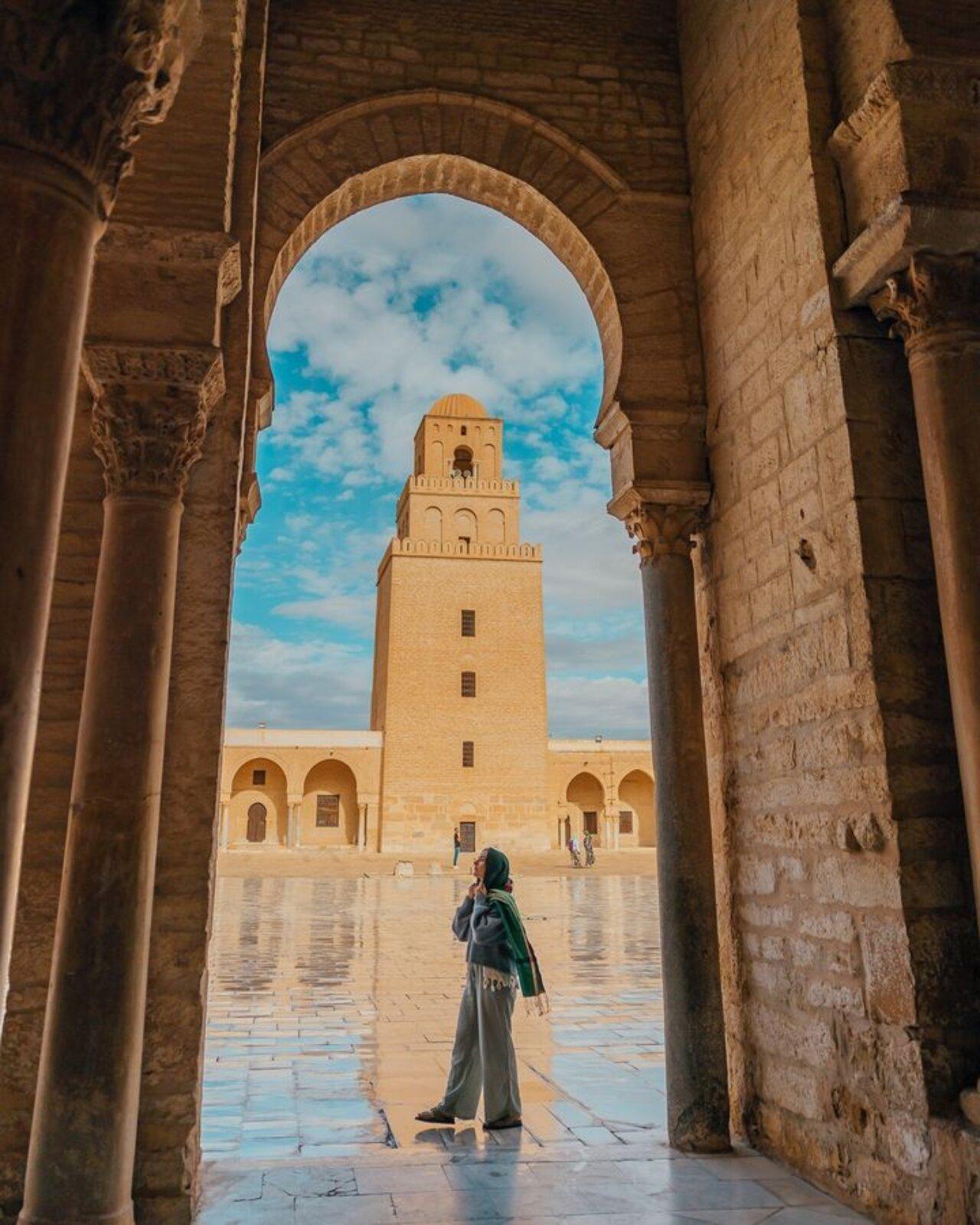
Most Kairouan and El Jem Tour tour groups continue to the archaeological museum, a short walk away, where mosaic floors from Thysdrus villas are laid at eye level rather than underfoot. If you have joined a Kairouan and El Jem Colosseum Tour with Lunch from Sousse, the coach turns inland afterwards, and you finish the afternoon in the flagstoned courtyard of the Great Mosque, shoes in hand, squinting up at a minaret that has stood since the ninth century.
All the details about your upcoming adventure in one place
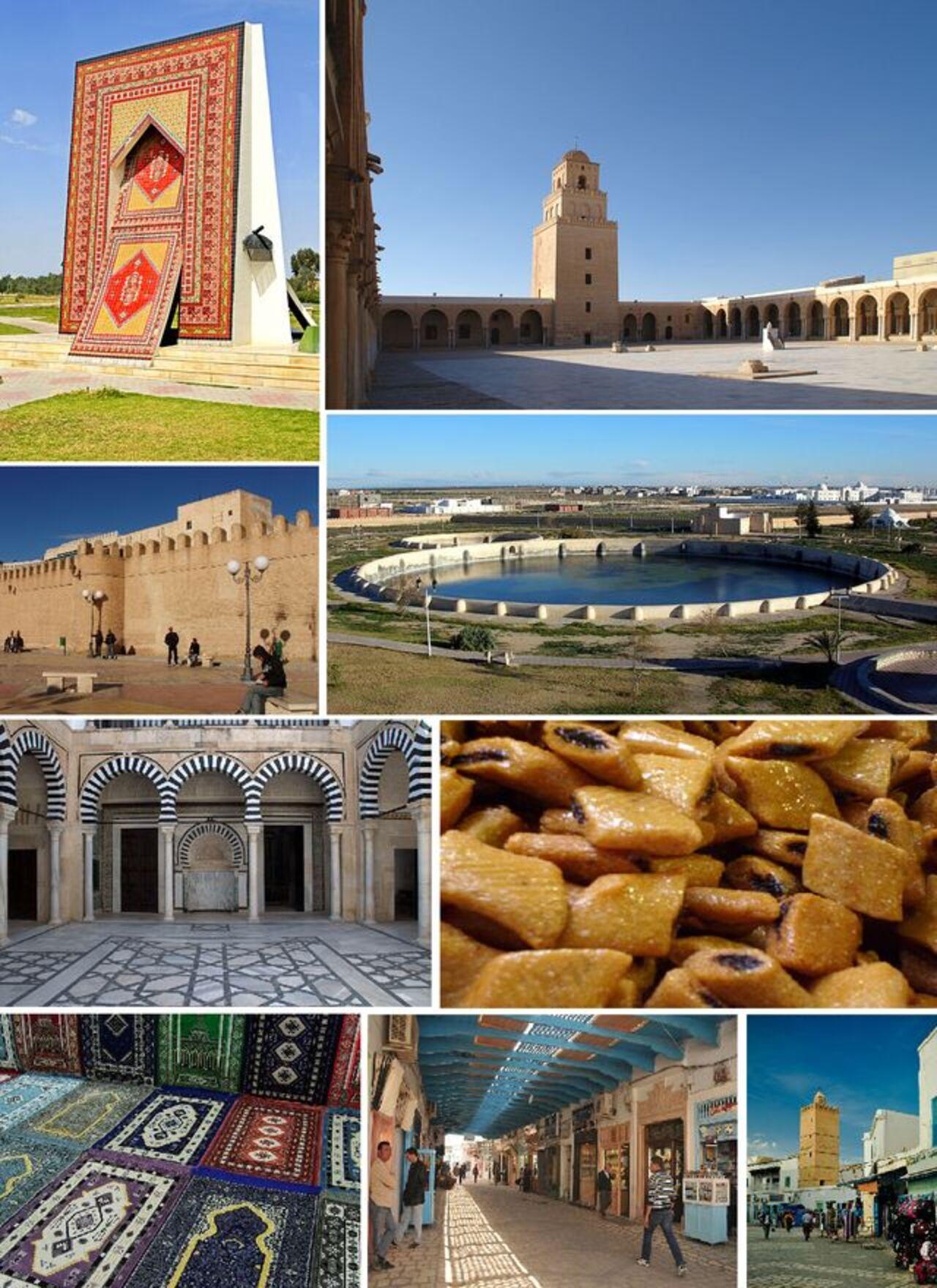
A kairouan and el jem tour links two UNESCO World Heritage sites in one drive across the Sahel plain: the Great Mosque of Uqba with its ninth-century minaret and courtyard sundial, and the Roman amphitheatre of Thysdrus, whose limestone arcades once held some 35,000 spectators. Most kairouan and el jem tour tours also fold in the Aghlabid Basins, the Zaouia of Sidi Sahab, and a stop at a workshop where the region's knotted carpets are woven. Roads are paved throughout and the coach covers roughly 300 kilometres, so the day is long but comfortably paced.
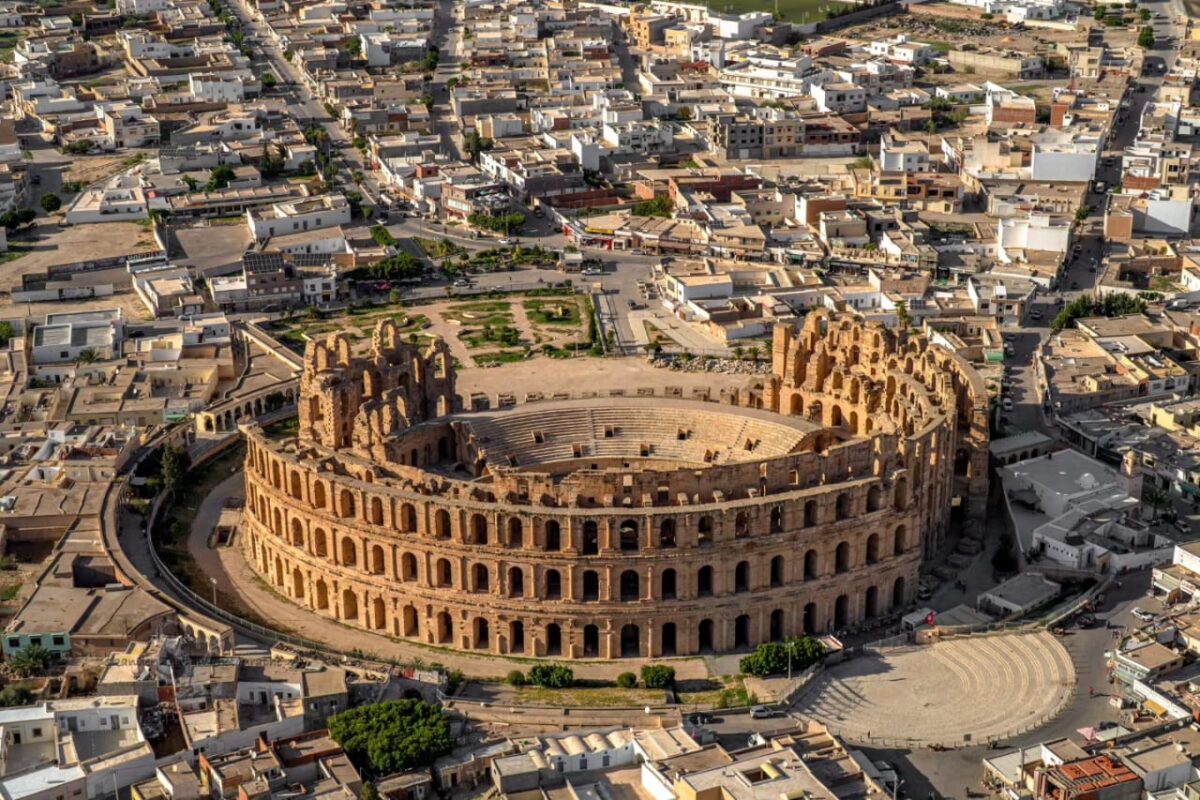
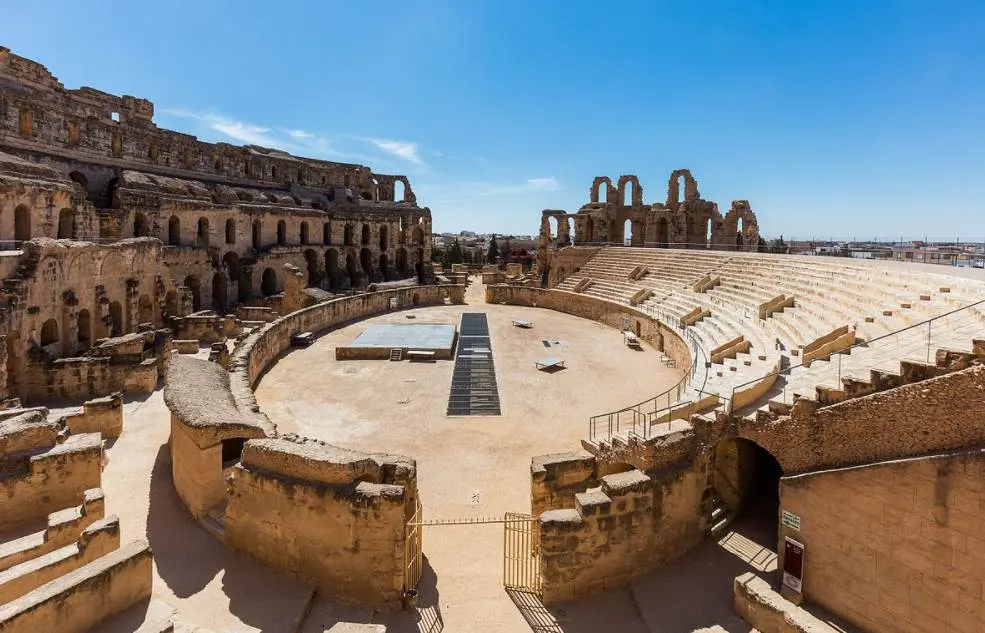
The amphitheatre at El Jem was raised to hold 35,000 spectators in a town that today counts barely 22,000 residents. Its three tiers of ochre limestone rose over Thysdrus, a Roman city grown wealthy pressing olives from the Sahel plains.
Construction is dated to around 238 AD, the year the proconsul Gordian was acclaimed emperor in this region. Most travellers now reach it on a Kairouan and El Jem Tour that couples the arena with the holy city ninety kilometres inland.
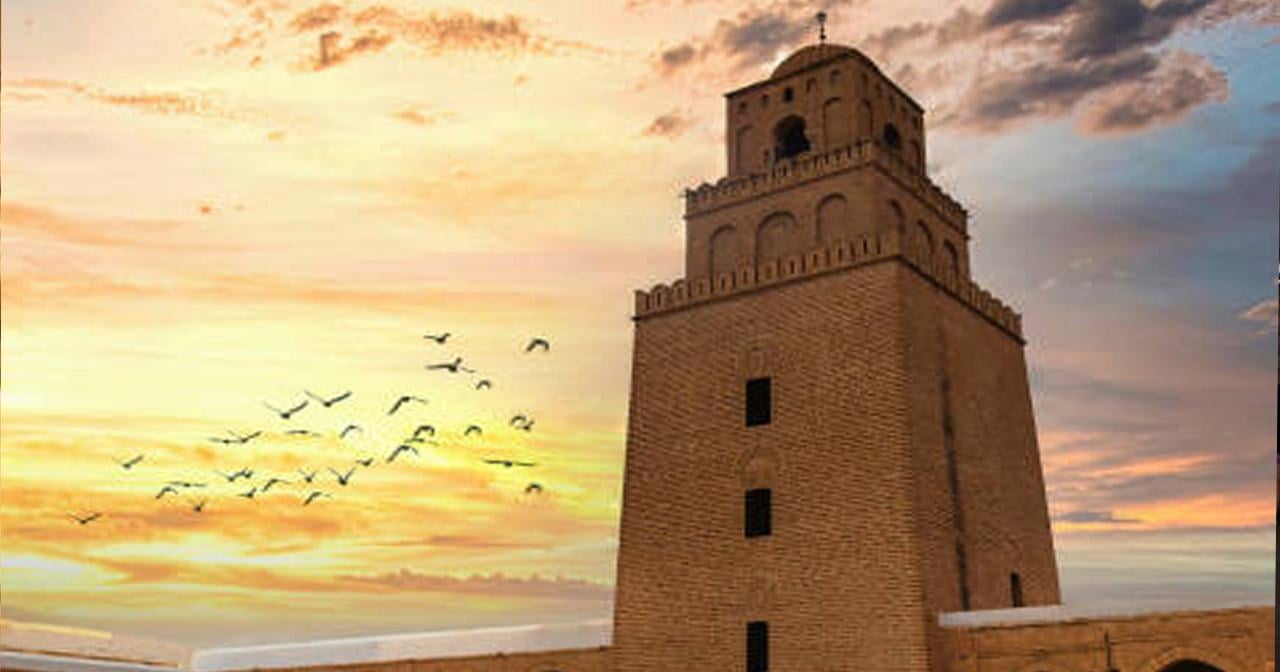
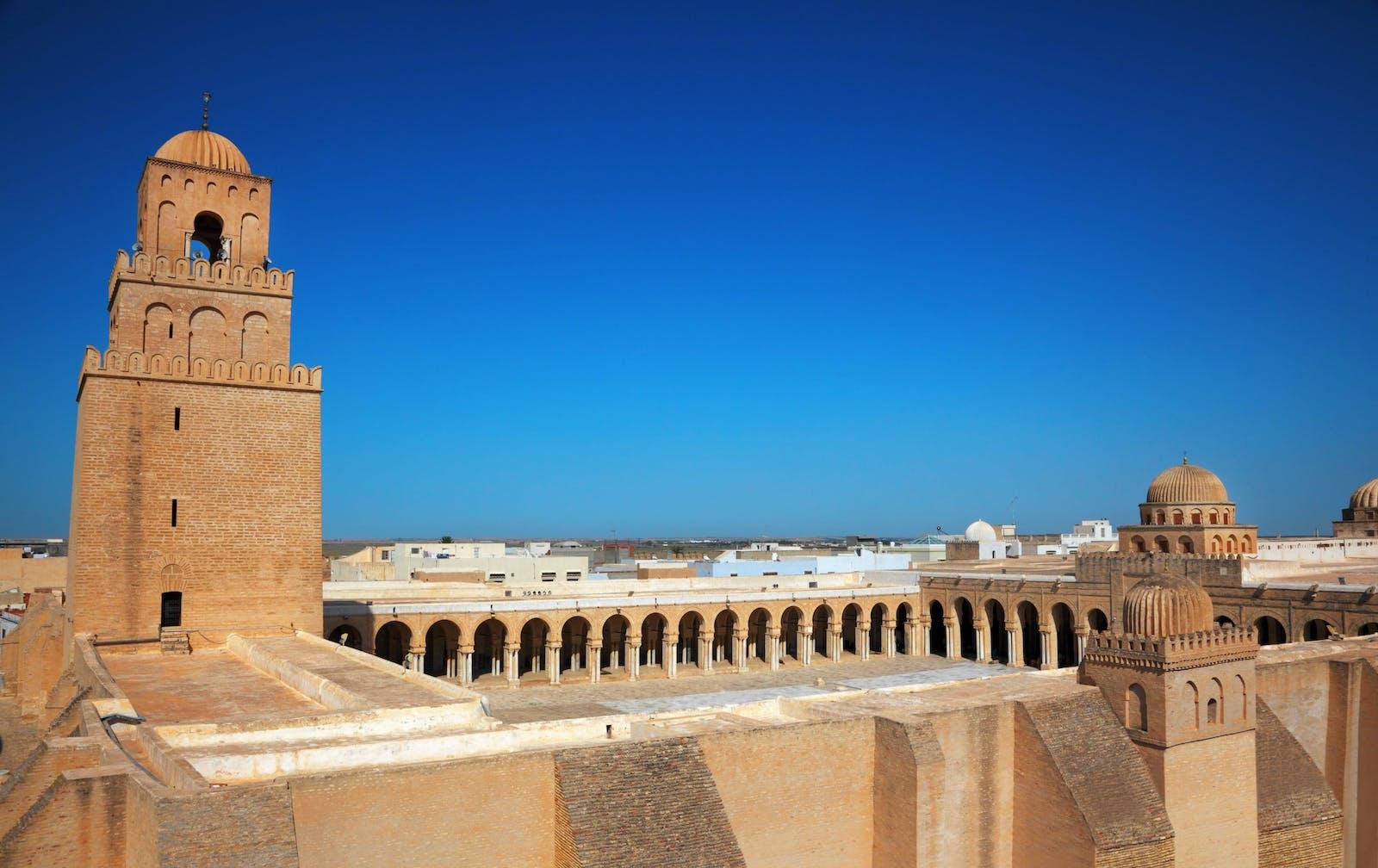
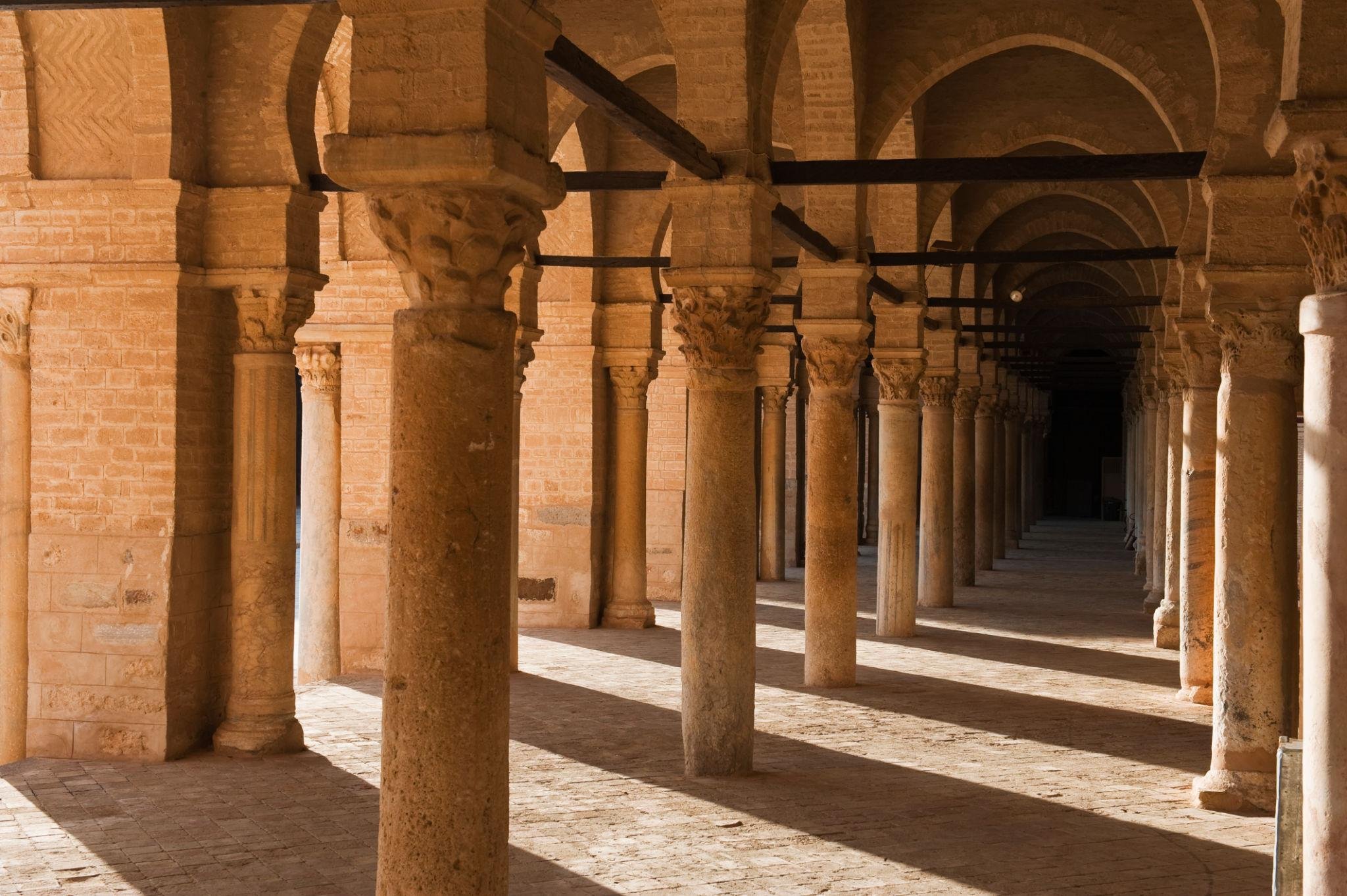
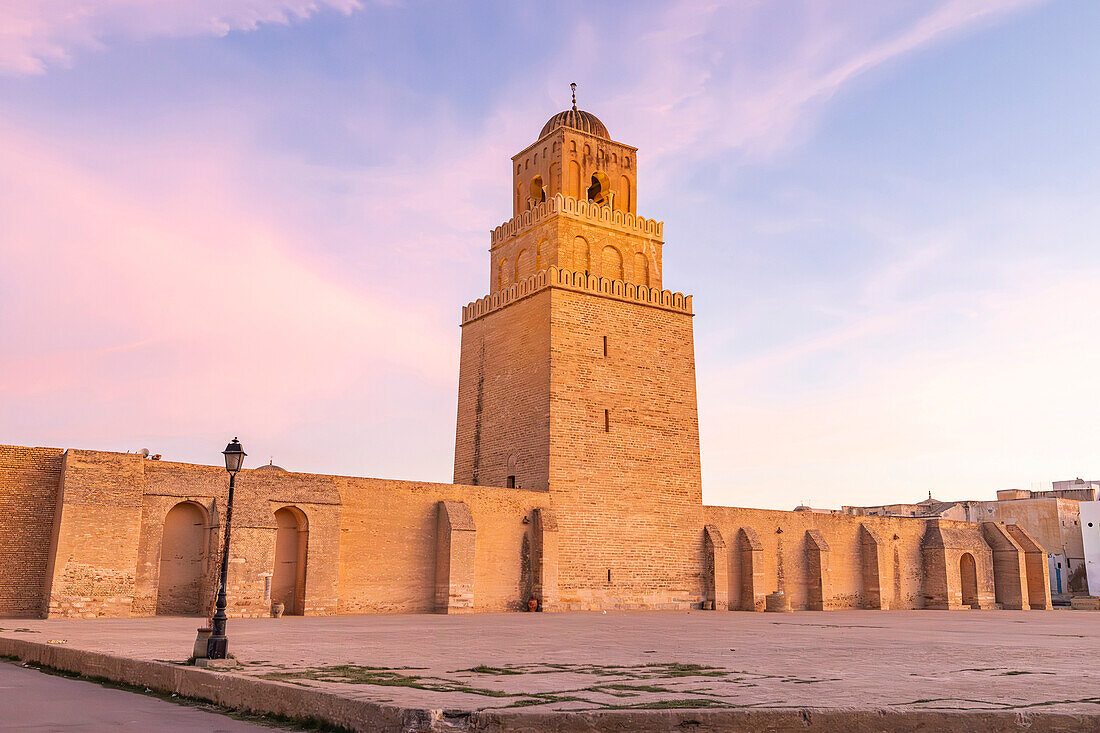
Both halves of the circuit carry UNESCO World Heritage inscription — El Jem since 1979, Kairouan since 1988. Operators sell the pairing as a Kairouan and El Jem Tour from Tunis, as a Kairouan El Jem Tour from Sousse, and as a Kairouan Holy City and El Jem Tour from Hammamet, all converging on the same two sites before noon. The Great Mosque of Uqba anchors the inland half: founded in 670 AD by Uqba ibn Nafi and rebuilt under the Aghlabids, its squat square minaret is among the oldest surviving in the Islamic world.
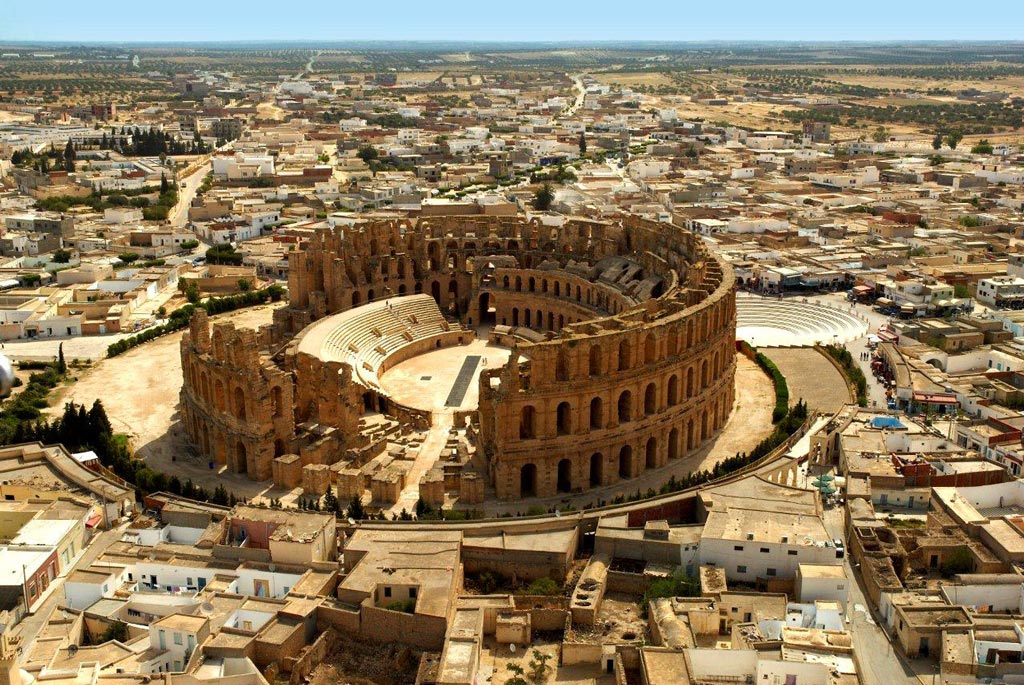
The El Jem structure measures 148 by 122 metres, its arena floor 65 by 39, with vaulted galleries running beneath the sand. Unlike the Colosseum it leans on no hillside; every arcade rests on free-standing masonry piers, which is why the northern flank still climbs close to 30 metres. The upper gallery, reached by original stairwells, still traces the full ellipse of the cavea. A short distance away, the archaeological museum arranges Roman mosaics lifted from surrounding villas, including panels from the House of Africa, inside reconstructed rooms. Combined Kairouan and El Jem Tour tickets cover the amphitheatre and the museum at 20 TND per person. Kairouan answers in a different geometry: the ninth-century Aghlabid basins, the glazed tilework of the Zaouia of Sidi Sahbi, and a medina of whitewashed lanes threaded with carpet workshops.
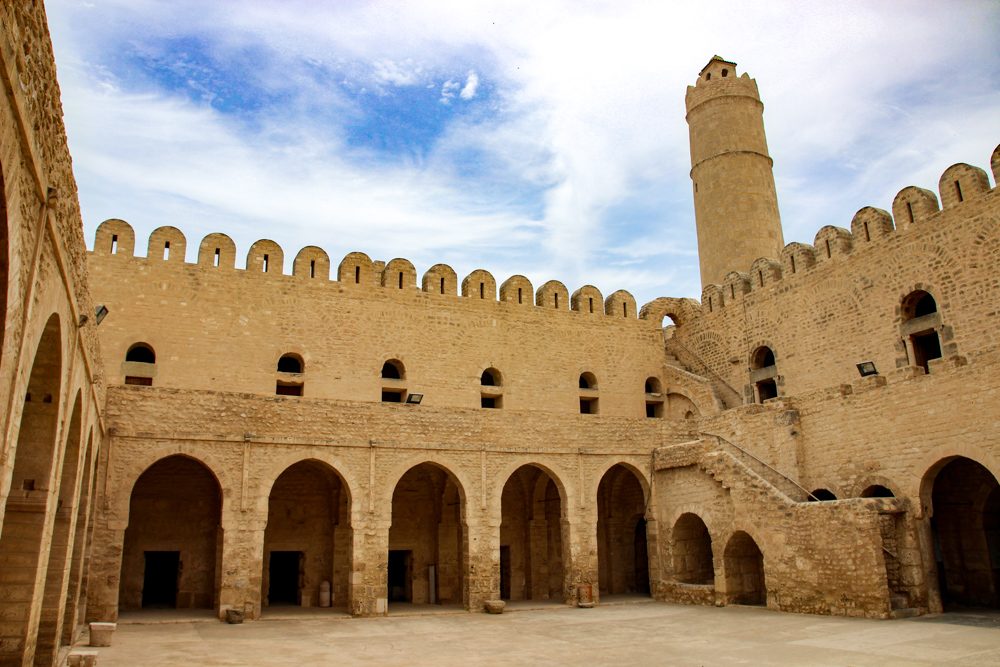
Sousse supplies a third register — the ninth-century Ribat, the Kasbah, the crenellated medina walls — and most Kairouan and El Jem Tour tours thread the coastal city in as a departure or return point. The amphitheatre and its museum keep identical hours every day of the week, 08:00–18:30, at El Jem, Mahdia Governorate, Tunisia. Arriving between 08:00 and 10:00 places a visitor inside the arena before the coaches from the coastal resorts, and before the heat settles over the Sahel.
No hillside props El Jem: the arcades carry themselves, thirty metres of masonry standing free above the plain.
Modest clothing is recommended when exploring the local towns on your kairouan and el jem tour. Shoulders and knees should be covered when visiting religious sites in Kairouan.
Standard backpacks are permitted for your kairouan and el jem tour, but large suitcases are not allowed inside the ruins. Security checks may be conducted at the amphitheatre entrance.
Personal photography is permitted throughout the amphitheatre and museum during your kairouan and el jem tour. Tripods and commercial filming equipment require prior authorization.
Families are welcome on the kairouan and el jem tour, though children must be supervised on steep staircases. Bringing sun protection for children is essential during summer months.
The ancient stone surfaces of the amphitheatre can be uneven and difficult for wheelchair access. Visitors with mobility concerns should focus on the ground floor levels of the site.
No food is allowed inside the historical monuments. Water bottles are recommended to stay hydrated during your kairouan and el jem tour.
Opening Hours
08:00–18:30
Address
El Jem, Mahdia Governorate, Tunisia
Entry
20 TND Combined Ticket
Arrival
08:00–10:00
Storage
Not available
Navigation
Follow signage within the amphitheatre
Car · Variable · Fuel costs
Rental cars provide the most flexibility for a Kairouan and El Jem tour circuit.
Taxi · Full day · Negotiated rate
Hire a private driver for a customized full-day kairouan and el jem tour.
Cancellations made 24 hours in advance receive a full refund. The 20 TND entrance fee is non-refundable if the ticket has been validated.
Recommended time
4-5 hours
To experience the kairouan and el jem tour effectively, allocate two hours for the amphitheatre and museum, plus transit time between these historical sites. Following the best arrival window of 08:00–10:00 helps you avoid peak heat and large groups from coastal areas when securing your kairouan and el jem tour tickets. You may adjust your pace based on the density of visitors exploring the subterranean passages or the stone seating areas of this UNESCO World Heritage landmark, making kairouan and el jem tour tours more enjoyable.
Crowd levels through the day
Weather · crowds · average price — dots go green to amber to red as each metric rises.
March to May offers mild temperatures perfect for outdoor exploration of Kairouan and El Jem.
June to August is very hot; visit in the early morning to manage the heat.
September to November provides cooling winds and lower crowds.
December to February is cool, requiring layers for the open-air monument visits.
Arrive at 08:00 to tour the monument before buses arrive.
The 20 TND fee covers both the amphitheatre and the museum.
Wear shoes with good grip for climbing ancient amphitheatre tiers.
There is limited shade in the arena, so wear a wide-brimmed hat.
Always ask before taking photos of local residents in Kairouan.
El Jem began as Thysdrus, a Punic settlement absorbed by Rome after the fall of Carthage in 146 BC. Olive oil made it wealthy. By the second century AD its presses supplied much of the empire, and the town's mosaic floors — many now in the Sousse and Bardo collections — recorded that prosperity. Around 238 AD the proconsul Gordian I was proclaimed emperor here by local landowners revolting against taxation. His reign lasted twenty-one days. The amphitheatre, begun under Gordian's patronage, was likely never finished. Any serious kairouan and el jem tour begins with that unfinished ambition: three tiers of arcades in golden limestone, seating for some 35,000, built without a hillside to lean on. Kairouan was founded in 670 AD by Uqba ibn Nafi, who chose an inland plain to keep the new garrison beyond reach of Byzantine ships. The Great Mosque he established was rebuilt in 836 by the Aghlabid emir Ziyadat Allah I, whose square minaret is among the oldest standing in the Islamic world. Its columns were salvaged from Roman ruins, El Jem among them. The Aghlabid basins, completed in 862, held water drawn by aqueduct across fifteen kilometres. Guides on a Kairouan landmarks tour still point out the reused Corinthian capitals inside the prayer hall. Both monuments came close to loss. In 1695 Mohamed Bey ordered the amphitheatre's western wall breached with cannon to dislodge rebels sheltering inside; stone was quarried from it for centuries afterwards to build the village and the mosque at Kairouan. Restoration began in earnest in the 1900s under the French protectorate, and UNESCO inscribed the amphitheatre in 1979, Kairouan in 1988. Travellers booking kairouan and el jem tour tickets today see a structure roughly two-thirds intact, its underground passages — where animals and fighters waited — excavated in the 1900s and reopened to visitors. Sousse completes the sequence. Its ribat, raised in 821, was a fortified monastery watching the coast the Aghlabids never quite trusted. A single kairouan and el jem tour tour crosses eight centuries; the broader circuit of kairouan and el jem tour tours joins Roman spectacle, Islamic scholarship, and coastal defence in one arc across the Sahel.
Rome annexes the region after Carthage falls, and Thysdrus grows into an olive-oil market town.
Landowners proclaim Gordian I emperor at Thysdrus; his reign collapses within three weeks.
Construction of the great amphitheatre begins and is left unfinished after the revolt fails.
Uqba ibn Nafi founds Kairouan inland as a garrison city and builds its first Great Mosque.
Ziyadat Allah I rebuilds the Great Mosque of Kairouan using columns salvaged from Roman sites.
The Aghlabid basins are completed, storing aqueduct water for the growing city.
Mohamed Bey breaches the amphitheatre wall with cannon to flush out rebels sheltering inside.
UNESCO inscribes the El Jem amphitheatre, then the medina of Kairouan, on the World Heritage list.
Stand in the center of the amphitheatre to capture the scale of the towering stone walls and tiered seating rows rising above you. This perspective highlights the sheer size of this UNESCO World Heritage site.
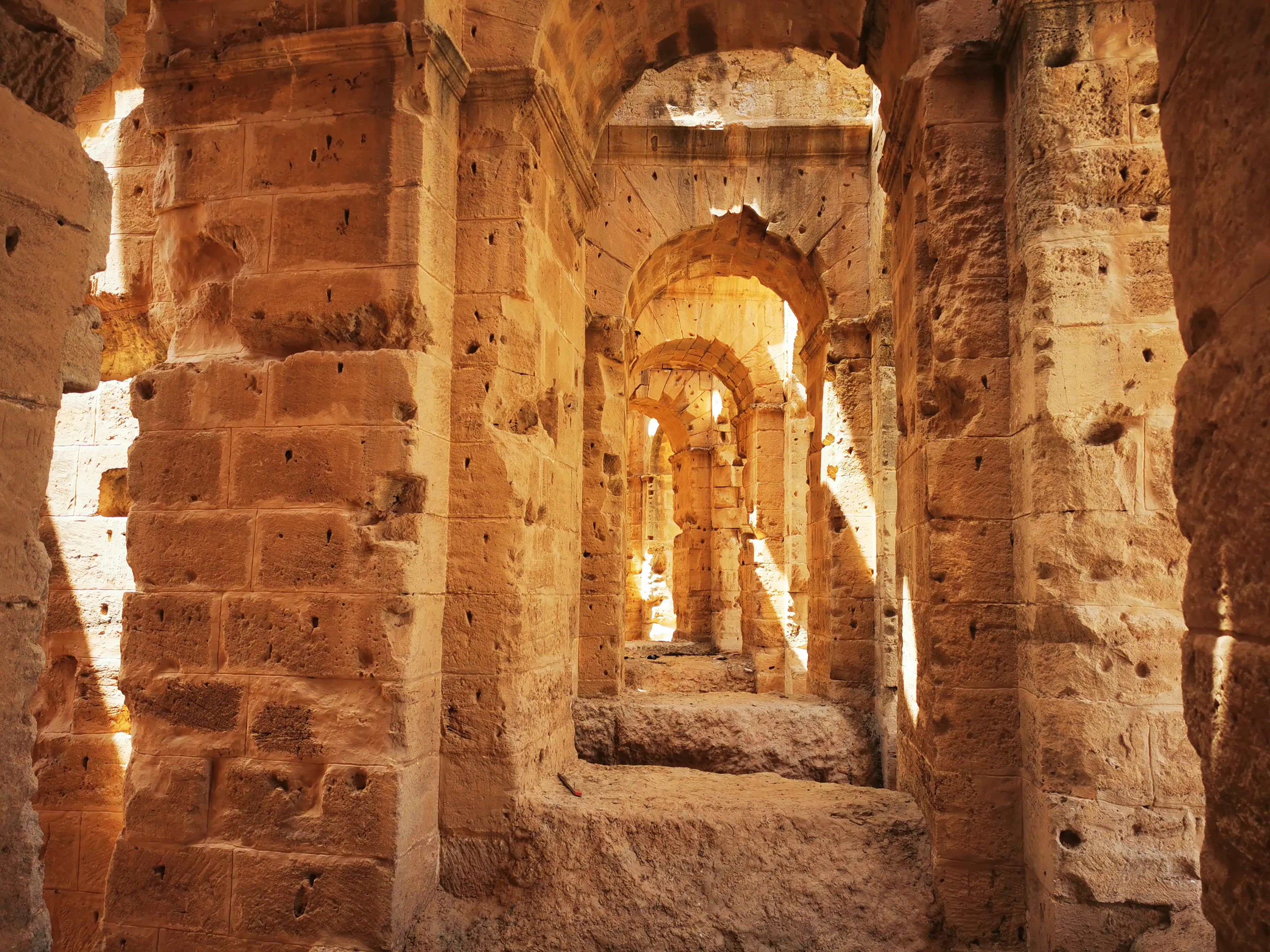
Descend into the underground chambers to photograph the vaulted corridors where gladiators and animals were held. This area provides high-contrast lighting and unique architectural details that are a highlight of any kairouan and el jem tour.
Climb to the upper levels for a wide-angle shot of the entire structure against the Tunisian sky. From here, you can see the layout of the Roman ruins and surrounding modern town scenery.
Capture the dramatic framing of the stone entrance gates from the exterior plaza. Using a wide lens helps emphasize the massive limestone blocks visible on kairouan and el jem tour tickets tours.
Dining options near the amphitheatre are limited, so most visitors on a kairouan and el jem tour prefer quick stops at local cafes or established restaurants within a short walk. While you explore these UNESCO heritage landmarks, you will find several authentic spots to grab a meal before your kairouan and el jem tour tours continue.
Located just steps from the amphitheatre, this spot serves traditional Tunisian couscous and tajine. It is popular with travelers needing a reliable meal between kairouan and el jem tour tickets validation and departure.
Real experiences from real travelers
We started the kairouan and el jem tour early and the amphitheatre was almost empty when we walked out onto the arena floor. The stone was already warm underfoot and you can hear your own footsteps echo in the underground passages where the animals were held. Bring a hat, there is no shade on the upper tiers.
Kairouan first, then El Jem, then a short stop in Sousse medina before the drive back. The Great Mosque of Uqba courtyard is enormous and the marble reflects so much light you squint the whole time. Our guide explained the Aghlabid basins on the way out, which I would have walked straight past otherwise.
The Kairouan landmarks tour part was the surprise for me — I expected the coliseum to overshadow everything but the square minaret and the horseshoe arches stayed with me longer. Women should carry a scarf for the mosque courtyard. Shoes come off in places, so slip-ons help.
Long stretches of flat olive country between stops, so download something for the bus. El Jem itself is genuinely bigger than photographs suggest and the vaulted corridors under the seating are cool and quiet. Only note is that lunch felt rushed.
The subterranean corridor at El Jem runs the length of the arena and the temperature drops noticeably as you descend. Our kairouan and el jem tour tickets included the small mosaic museum nearby, which was a quiet twenty minutes well spent. August heat is real — we finished the outdoor sections before eleven.
In Kairouan the guide walked us past the carpet workshops near the medina and explained the knotting without any pressure to buy. The Zaouia of Sidi Sahbi has tilework in blue and white that photographs beautifully in the late morning light. Sousse at the end felt busier and more coastal, a good contrast.
We did this in late January and the low sun through the El Jem arches was the best light I have had in Tunisia. Fewer people too — we had whole sections of the upper seating to ourselves. Layers needed, the wind cuts across the plain.
As someone who has seen the Colosseum, I found the Thysdrus amphitheatre better preserved in its outer wall than I expected. Guided tours of El Jem run at a steady pace, and ours left room to climb to the top tier alone. The mosaics in the museum tie the whole Roman North Africa story together.
Booked the kairouan and el jem tour for a group of six and the small-van format worked well on the narrow medina approaches. Standing in the centre of the arena and looking up at four levels of arches gives a proper sense of the twenty-thousand-seat scale. The Sousse ribat climb at the end has steep stairs but the rooftop view over the Mediterranean is worth it.
Beautiful sites but late June was punishing and the schedule did not really account for it. The Kairouan medina stop felt short after the long drive from the coast. Still glad we saw the amphitheatre, just choose your month carefully.
Our guide had us stand at opposite ends of the arena to test the acoustics and it genuinely carries. Among the day trips from Sousse this is the one I would repeat, and kairouan and el jem tour tours seem to run most mornings so timing was flexible. Small detail I liked: the ticket office keeps a scale model showing how the missing seating tiers once looked.
Everything you need to know for your journey
The site is open daily from 08:00–18:30. Visitors are encouraged to arrive during the 08:00–10:00 window to enjoy the most comfortable experience.
The entrance fee is 20 TND per person, which is a combined ticket for the amphitheatre and the museum.
Modest dress is advised, particularly in Kairouan. Ensure shoulders and knees are covered when entering local religious landmarks.
Small personal bags are allowed, but large suitcases are prohibited during your kairouan and el jem tour.
The best time to visit is between 08:00 and 10:00 to avoid the mid-day heat and large group crowds.
Yes, the experience is suitable for families, though children require supervision on uneven terrain.
Cancellations 24 hours in advance are eligible for a refund. Entrance fees are non-refundable after validation.
Outside food is not permitted at the historical sites, so plan to dine in the nearby towns of El Jem or Sousse.
While standard entry is 20 TND, booking a tour in advance can provide guided access to the ruins.
Contains world-renowned Roman mosaics.
Features traditional architectural styles.
A major UNESCO site in the region.
Local choice for convenient site access.
Beachfront hotels near the northern hub.
Traditional stay in the historic center.
Join thousands of happy travelers who have discovered this incredible experience
Book Your Experience Now